

Your Home’s Value: Why the "Fast" Number is Usually the Wrong One
When you decide to sell your home, one single number dictates your entire experience: the asking price. Price it perfectly, and you spark a bidding war. Price it too high, and your home becomes "stale" as buyers scroll past, wondering what’s hidden behind the walls. To get it right, you have to avoid the most common trap in modern real estate: The Algorithm Trap.
The Blind Spots of Online Estimators
Online home value tools are addictive. They’re fast, private, and offer instant gratification. But there is a massive gap between a "data point" and a "marketable price."
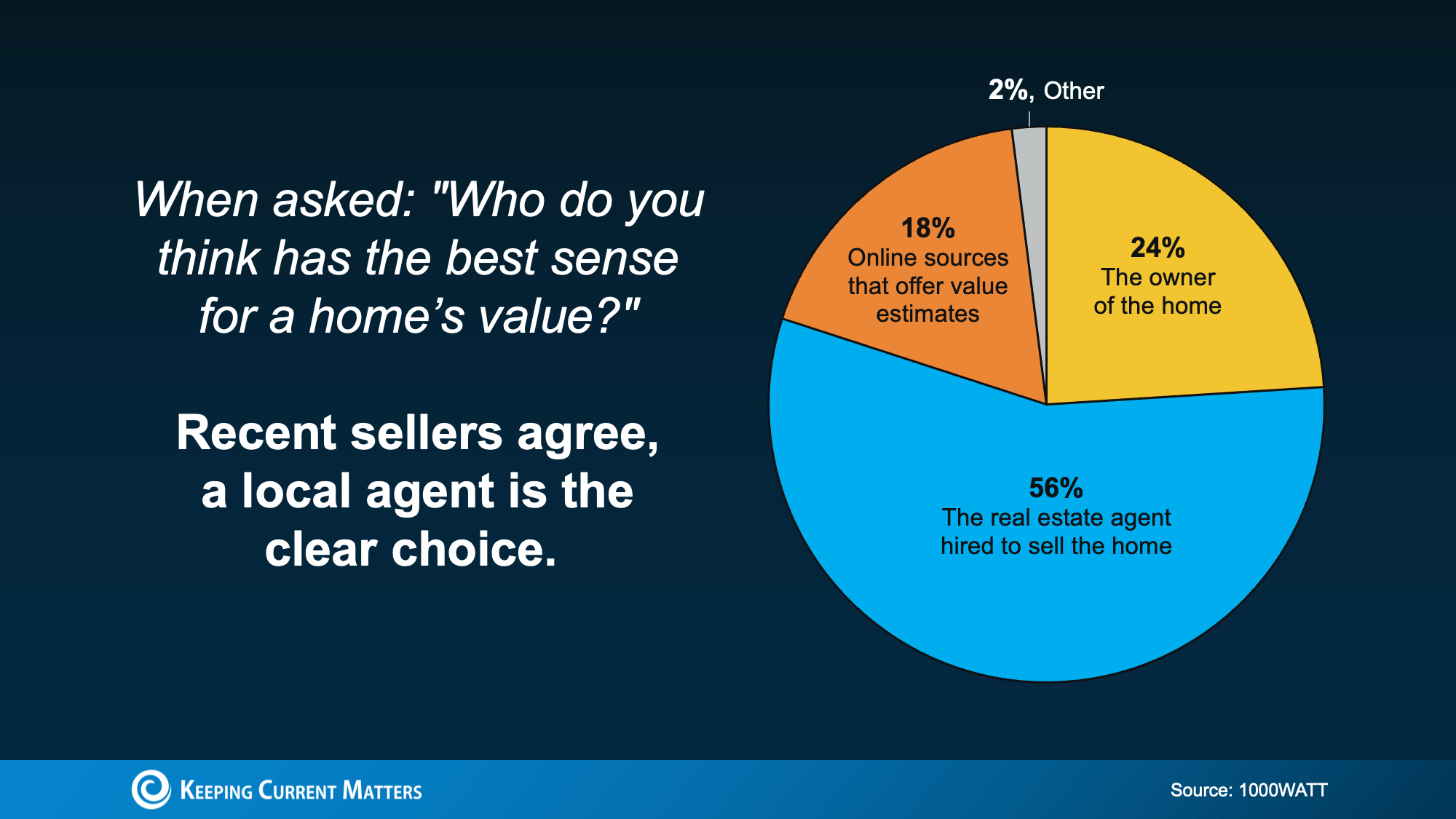
Algorithms are built on historical data—they are essentially looking in the rearview mirror. As Bankrate points out, these tools lack the "eyes" to see your home's true value. They simply cannot account for:
The "Invisible" Upgrades: That $40k chef’s kitchen or the high-efficiency HVAC system? The algorithm can't see them.
Hyper-Local Nuance: A computer doesn't know that being on the quiet side of the cul-de-sac or within a specific school boundary adds 5% to your value.
Real-Time Sentiment: Algorithms don't know that three buyers lost out on a house down the street yesterday and are now desperate for a listing exactly like yours.
Why Local Expertise Outperforms Big Data
While most sellers instinctively trust agents more than automated tools, many still use online estimates because they are "easy." But in a shifting market, easy is expensive.
A local agent provides what a computer cannot: Context. While an algorithm relies on public records and tax history, an expert agent uses real-time pending sales and "pocket" listings. While a tool assumes your home is in "average" condition, an agent performs a verified in-person inspection. Most importantly, while a computer calculates a mathematical average, an agent builds a psychology-based pricing strategy designed to create urgency.
Leaving Money on the Table
It’s a common story: a homeowner trusts an online estimate, only to have an agent walk through and realize the home is worth $25,000 more due to its layout, natural light, or specific local demand. If that owner had hit "publish" on the online price, they would have lost that equity before the first showing even happened.
The Bottom Line
An online estimate is a conversation starter; a local agent’s evaluation is a closing strategy. If you want the maximum return on your investment, you don't need the fastest number—you need the most accurate one.
