

Is Wall Street Really Buying Every Home on the Block?
If you’ve been scrolling through news headlines lately, it’s easy to feel like you’re in a "David vs. Goliath" battle for homeownership. The narrative often suggests that massive Wall Street firms are swooping in with endless cash, leaving everyday buyers in the dust.
But if you’re feeling discouraged, take a deep breath. When we move past the scary headlines and look at the actual data, the "corporate takeover" of the housing market looks more like a myth than a reality.
The "Investor" Identity Crisis
The word investor is a broad term that gets thrown around a lot. When headlines shout about "investor activity," they often lump everyone into one bucket. However, the vast majority of investors aren't suits in high-rise offices; they are your neighbors.
Most of these owners are:
Vacation homeowners (the family with the cabin by the lake).
Mom-and-pop landlords who own one or two rentals as a retirement nest egg.
Accidental landlords who couldn't sell their home for the right price and decided to rent it out instead.
When you group these everyday people with billion-dollar corporations, the numbers look inflated. But once you separate them, the "big guys" don't look so big after all.
By the Numbers: The Small Slice of Institutional Owners
How much of the market do these massive corporations actually control? According to BatchData, institutional investors (those owning 1,000+ properties) own just 0.4% of the 86 million single-family homes in the U.S.
Not only is their share tiny, but they are also currently in "sell mode." Data from Parcl Labs reveals a surprising trend: Large investors are currently selling four homes for every one they buy.
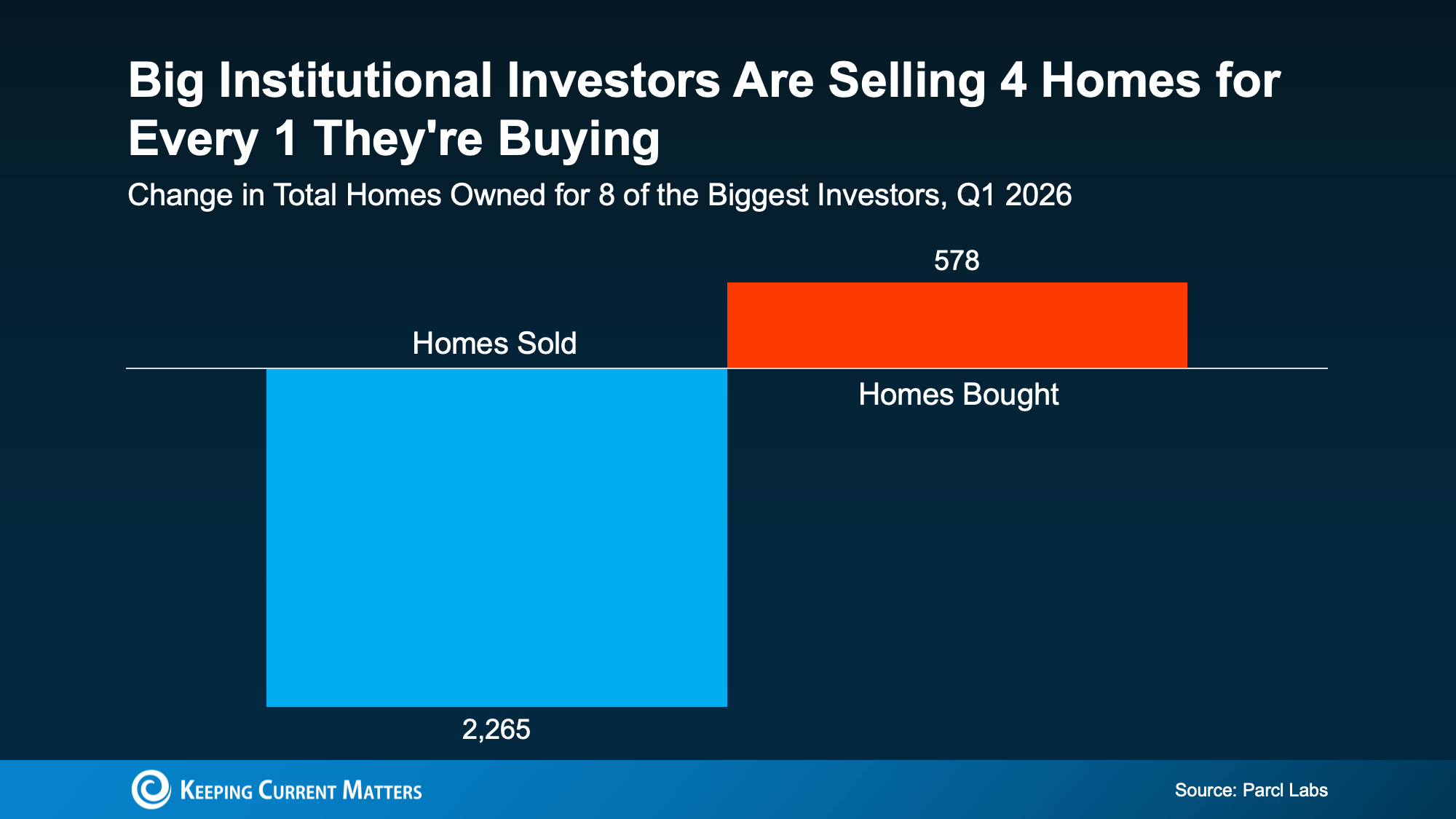
The Reality Check: Big firms have recently added nearly 1,700 homes back into the housing supply. Rather than hoarding inventory, they are actually stepping back.
What This Means for Your Home Search
If you’ve been waiting on the sidelines because you’re afraid of competing with a corporate checkbook, here is your peace of mind:
Lower Corporate Competition: Most big firms are cooling off, not heating up.
A Level Playing Field: Your primary competition is likely other people just like you—families and individuals looking for a place to call home.
More Opportunity: With institutional buyers selling off more than they buy, there is more inventory returning to the market for traditional buyers.
The Bottom Line
Don't let sensational headlines dictate your home-buying strategy. The data shows that the "corporate boogeyman" isn't nearly as dominant as social media might suggest.
If you want to know exactly what the competition looks like in our specific neighborhood, let’s chat. Local market trends often tell a much more optimistic story than national news.
