

Don’t Let Your Sale Fall Through: How to Master the Home Inspection Phase
You might have seen the headlines: buyer cancellations are hitting highs we hasn’t seen since 2017. While that sounds like a reason to panic, there is a silver lining. Most of these "dead deals" share a single, preventable cause.
If you’re planning to sell, the power to keep your deal on track is actually in your hands. Here is how to get ahead of the #1 dealbreaker in today’s market.
The Elephant in the Room: The Home Inspection
According to a recent Redfin survey, over 70% of cancelled contracts were triggered by issues found during the home inspection.
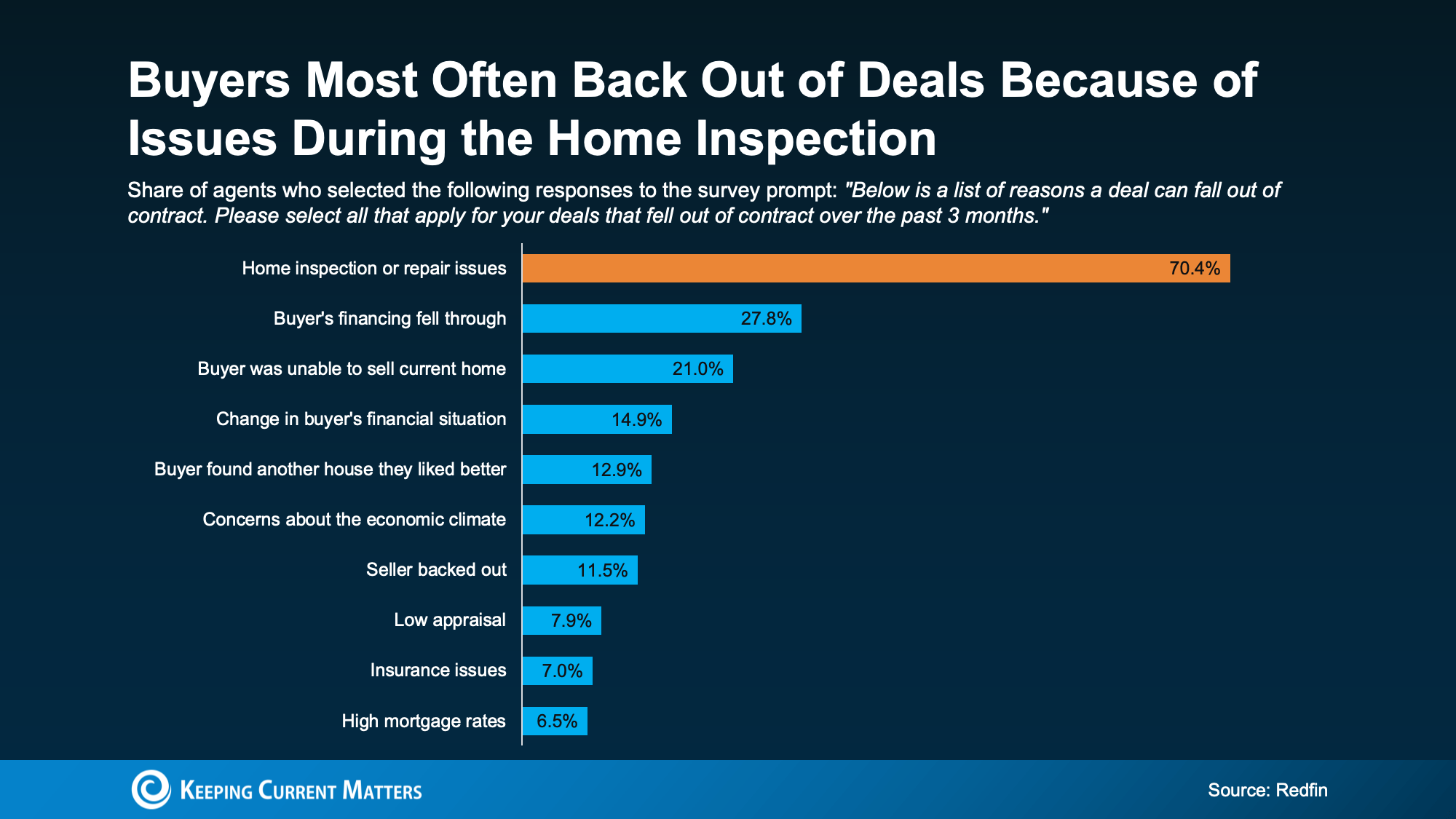
A few years ago, buyers were so desperate for housing that they would overlook a leaky faucet or an aging roof. Today, the script has flipped. With more inventory on the market, buyers have options. They are no longer willing to inherit a "money pit," and they’ll walk away the moment a repair list looks too long.
The "Big Eight" Issues Buyers Hate
To a buyer, these aren’t just cosmetic fixes—they are red flags that break trust. According to Zillow, these are the most common "deal-killers" you should have on your radar:
Structural & Roofing: Sagging floors, foundation cracks, or active roof leaks.
Mechanical Systems: Non-functioning HVAC units or outdated water heaters.
Electrical Concerns: Exposed wiring, outdated panels, or missing GFCI outlets.
Plumbing Problems: Standing water, hidden leaks, or signs of water damage.
Safety & Code Violations: Missing smoke detectors or windows that are stuck closed.
Hazardous Materials: The presence of mold, lead, or asbestos.
Pest Damage: Active termite colonies or structural wood rot.
Strategy: The Pre-Listing Inspection
To a buyer, a surprise repair isn't just an expense; it’s a trust issue. Once they start wondering what else you’ve neglected, the momentum of the sale dies.
Many savvy sellers are now opting for a pre-listing inspection. Think of it as a "cheat sheet" for your own home. It allows you to:
Fix it on your timeline: No more scrambling for contractors 48 hours before closing.
Price accurately: If you know the roof is old, you can price the home accordingly or offer a credit upfront.
Remove the "Shock Factor": By disclosing issues early, you take away the buyer’s leverage to negotiate a massive price drop later.
Pro Tip: You don't have to fix everything. You just need to be strategic. A local agent can help you differentiate between a "must-fix" and a "nice-to-fix" based on what buyers in your specific neighborhood are prioritizing.
The Bottom Line
In a market where buyers are being more selective, being proactive is your best defense. Don't wait for the buyer's inspector to find a problem—find it first, address it, and move toward the closing table with confidence.
