
Is Renting Still the "Safe" Bet? The Reality of Today's Housing Market
Renting feels like the path of least resistance. You skip the massive down payment, avoid the headache of a broken water heater, and keep your bags packed for whatever comes next.
But there’s a tipping point. Every time your lease renews with a higher price tag, that "flexibility" starts to feel like a financial trap. If you’re tired of paying someone else's mortgage and building zero equity, it’s time to look at the math. Despite the headlines about high costs, the data suggests that buying a home is more attainable than you might think.
The Monthly Math: Buying vs. Renting
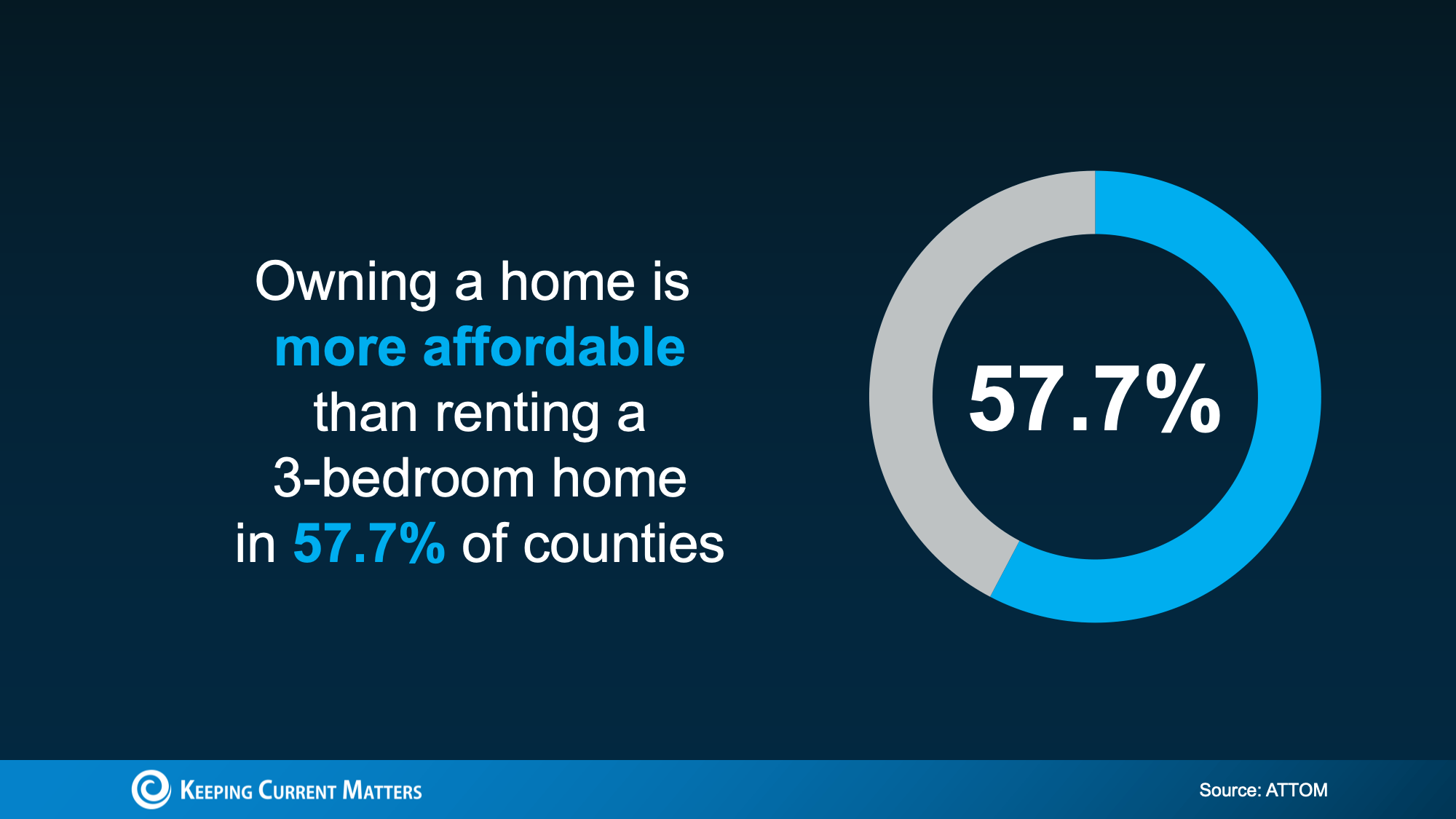
It’s a common myth that renting is always the cheaper monthly option. However, recent data from ATTOM tells a different story: in nearly 58% of U.S. counties, owning a home actually costs less per month than renting a three-bedroom property.
This calculation isn't just a surface-level comparison; it factors in the "hidden" costs of ownership, such as:
Homeowners insurance
Regular maintenance and repairs
Property taxes
Why is this shift happening now? We’re seeing a "perfect storm" of cooling home price growth, an increase in available inventory, and mortgage rates beginning to stabilize. In many markets, the rent check you write every month is actually stretching your budget further than a mortgage payment would.
Location, Location, Affordability
While the national trend is leaning toward buyers, the "buy vs. rent" debate is highly regional. Where you live dictates how quickly you can make the jump to homeownership.
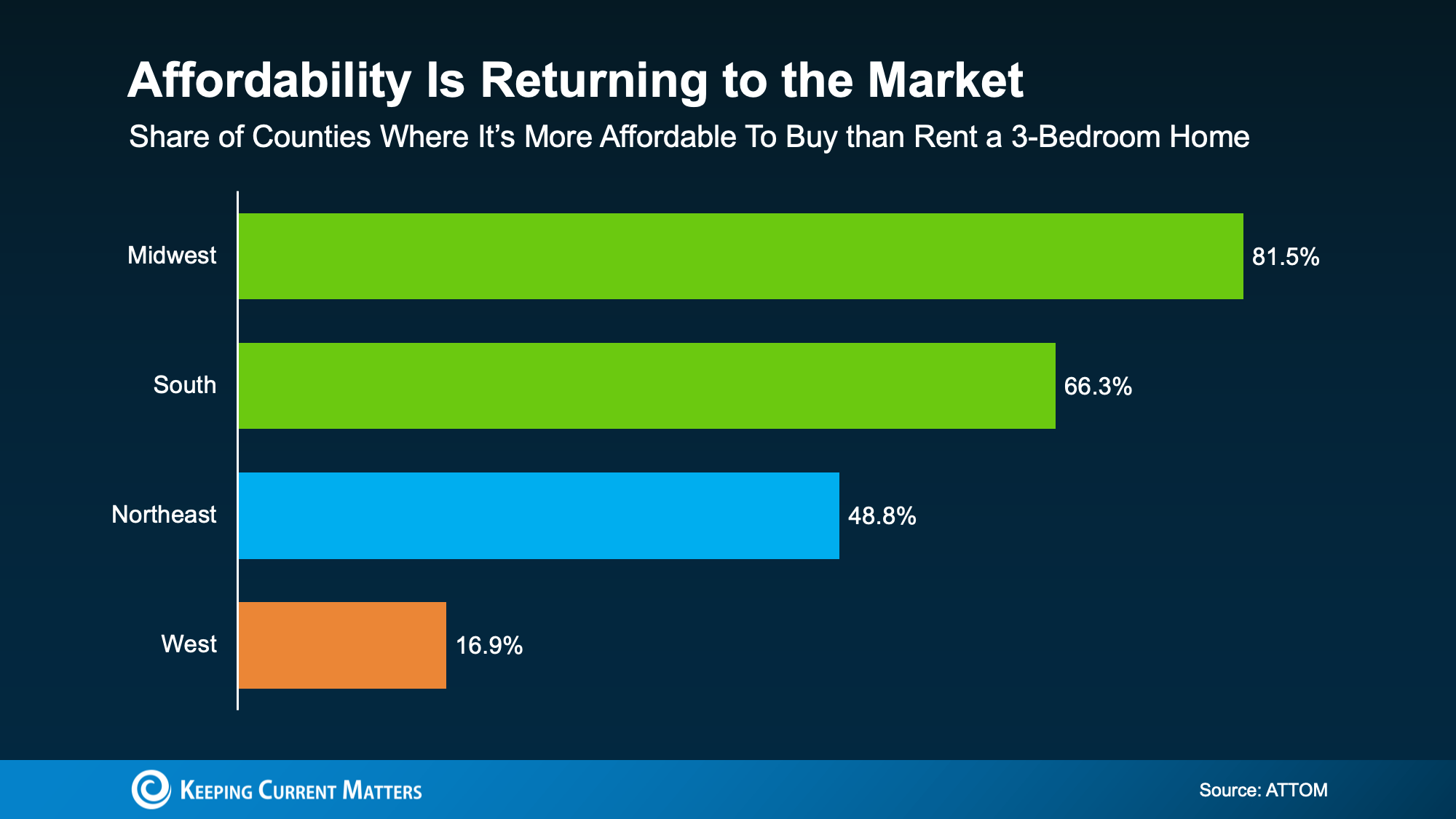
The Takeaway: National averages are a starting point, but your local market is what matters. The only way to know if the math works for you is to look at your specific zip code.
The "Down Payment" Myth
Even if the monthly payments make sense, most renters hit a wall when they think about the upfront cash. If you’re waiting until you have a 20% down payment saved, you might be waiting forever—and you don't have to.
There are thousands of down payment assistance programs nationwide designed to bridge this exact gap.
The Surprise Factor: Many buyers qualify for these programs without realizing it.
The Benefit: The average assistance benefit is roughly $18,000.
That $18,000 can cover a significant portion of your down payment or closing costs, drastically lowering the "barrier to entry" for your first home.
Bottom Line
Renting isn't always the "easier" financial choice—sometimes, it's just the more expensive one. If you’re feeling stuck in a cycle of rising rent and zero equity, it’s time to stop guessing and start calculating.
You don't have to commit today, but you should know your options. A quick conversation with a local real estate expert can help you determine if "someday" could actually be "now."
